Starting Your First Raised Bed Garden
Why Raised Beds?
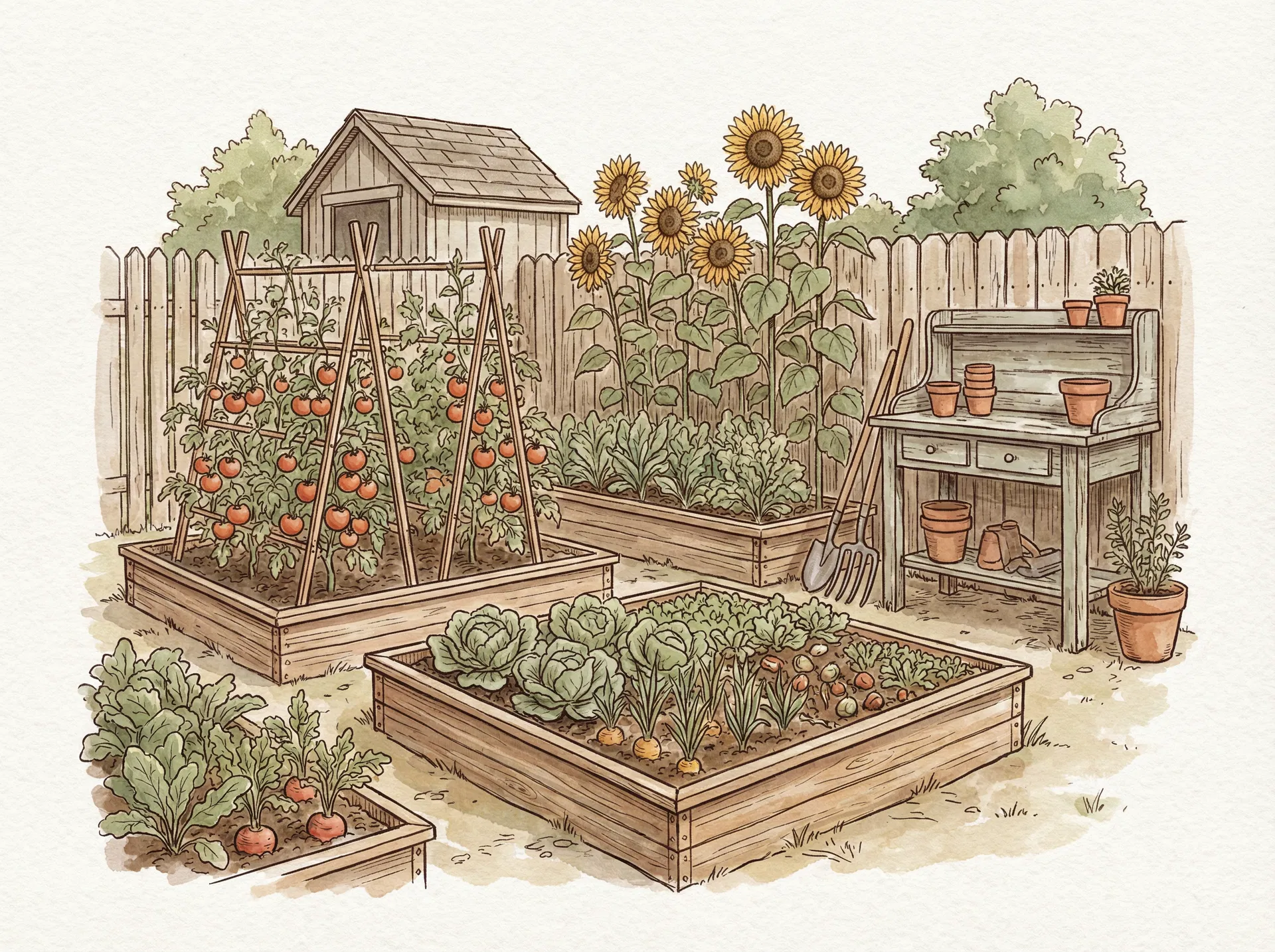
Raised bed gardens are one of the best ways to start growing your own food. They offer better drainage, warmer soil in spring, and you have complete control over the soil quality. Plus, they're easier on your back!
Choosing Your Location
Look for a spot that gets at least 6-8 hours of direct sunlight per day. Most vegetables and herbs need full sun to thrive. If you only have partial shade, don't worry — leafy greens like lettuce, spinach, and kale actually prefer a bit of afternoon shade.
Building Your Bed
You don't need fancy materials. Here's what works beautifully:
- Untreated cedar or redwood — naturally rot-resistant
- Reclaimed bricks or stones — perfect for that rustic look
- Repurposed pallets — free and full of character
Aim for beds that are 4 feet wide (so you can reach the center from either side) and at least 12 inches deep for most vegetables.
The Perfect Soil Mix
The magic formula for raised bed soil:
- 1/3 quality topsoil
- 1/3 compost (homemade is best!)
- 1/3 coarse vermiculite or perlite
What to Plant First
If you're a beginner, start with these forgiving favorites:
- Tomatoes — nothing beats a homegrown tomato
- Zucchini — almost impossible to kill
- Herbs — basil, parsley, and chives are wonderfully easy
- Lettuce — ready to harvest in just 30 days
- Green beans — plant and forget until harvest time
"The best time to plant a garden was twenty years ago. The second best time is now."
Happy planting, friends! Remember, every garden starts with a single seed and a whole lot of hope.